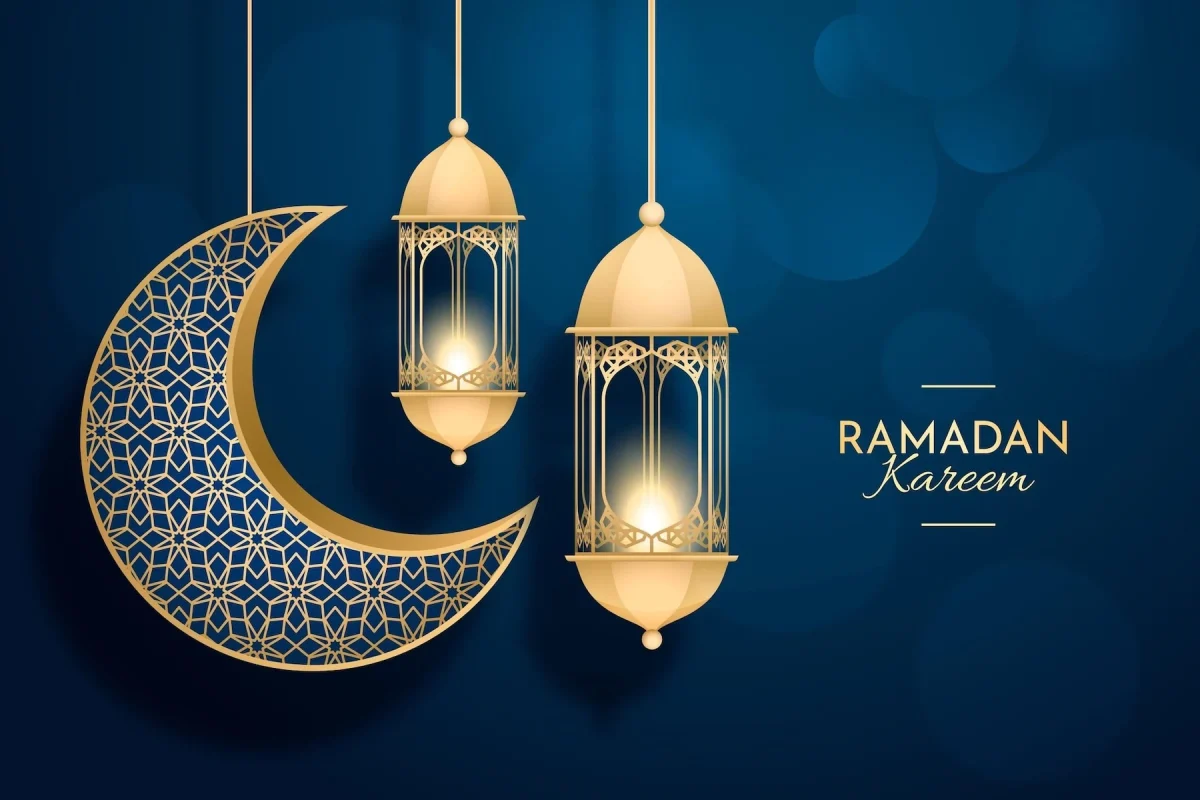
Ten days earlier and for 30 straight days, Ramadan is back on February 17th. Ramadan is the Islamic holy month, specifically the ninth month on the Hijri calendar, that centers around purity, fasting, and spiritual observance. After the 30th day of Ramadan, Muslims celebrate the concluding holiday named Eid-al-fitr to mark Ramadan’s end.
For 29-30 days, Muslims primarily above the age of 12 are required to fast from sunrise to sunset, which averages between 12 and 20 hours depending on the time of year. Fasting from sunrise to sunset means that Muslims refrain from consuming any food or water during this period. Ramadan also includes some other restrictions, such as no music, no derogatory language, and no smoking. This holy month also highlights the teachings of Allah (God), focusing on themes of spiritual growth and discipline, as it is a time for heightened worship, self discipline, and control, which relates to fasting. Many people think that Ramadan is just about fasting, but Muslims are also encouraged to pray five times a day, give back to the poor, read the Qur’an (some actually try finishing it within the span of Ramadan), connect more with their faith, and draw closer to Allah.
It is important to fast during Ramadan for several reasons: to attain piety, to seek forgiveness, and to appreciate the pain of hunger. Fasting is also one of the five pillars of Islam; the other four pillars include: Shahada (one’s faith), Salah (prayer), Zakat (giving back to the poor), and Hajj (the Islamic pilgrimage). Although there isn’t an exact date on when Ramadan began, it is certain that we look back to 610 A.D. as a significant period of time in Islamic history since this is when Muhammad, the last prophet of Islam and messenger of Allah, received the first few words of the Holy Qur’an. This moment goes down in history as the “Night in Power”. During this time, Muhammad was meditating in the cave Hira, located near Mecca. Suddenly, one of the angels from heaven, Jibril, came down from the sky to reveal to Muhammad the first words of the Qur’an and that he was the last Prophet of Islam. It is important to know that at this time, Prophet Muhammad was unaware he was a prophet, let alone the last prophet. Being the last prophet of Islam meant that Muhammad was assigned to spread the Islamic teachings and to spread the word of Allah, much like other religious figures like Abraham for Judaism and Jesus for Christianity. About 20 years later, in 622 A.D., the Prophet and his followers were in Medina, a city in Saudi Arabia “where the hot climate influenced the term ‘Ramadan”’ as Ramadan roughly translates to burning heat.
Nowadays, as Ramadan has become more familiar, many people recognize it. Schools in Virginia only recently started approving students to have a day off from school for Eid-al-fitr with Loudoun and Fairfax County making it a student holiday in the 2021/2022 school year. The school board’s addition of this holiday helps provide inclusivity and recognition of Islam as there are thousands of Muslim students in Loudoun County. In addition to that, this act paved the way for students to have a day off for other religious holidays for other religions such as Yom Kippur and Diwali.
To sum it all up, Ramadan is a holy month-long celebration to enhance faith and piety with a special holiday, Eid-al-fitr, to celebrate the end of the momentous practice. Don’t forget to wish your Muslims friends Ramadan Mubarak!