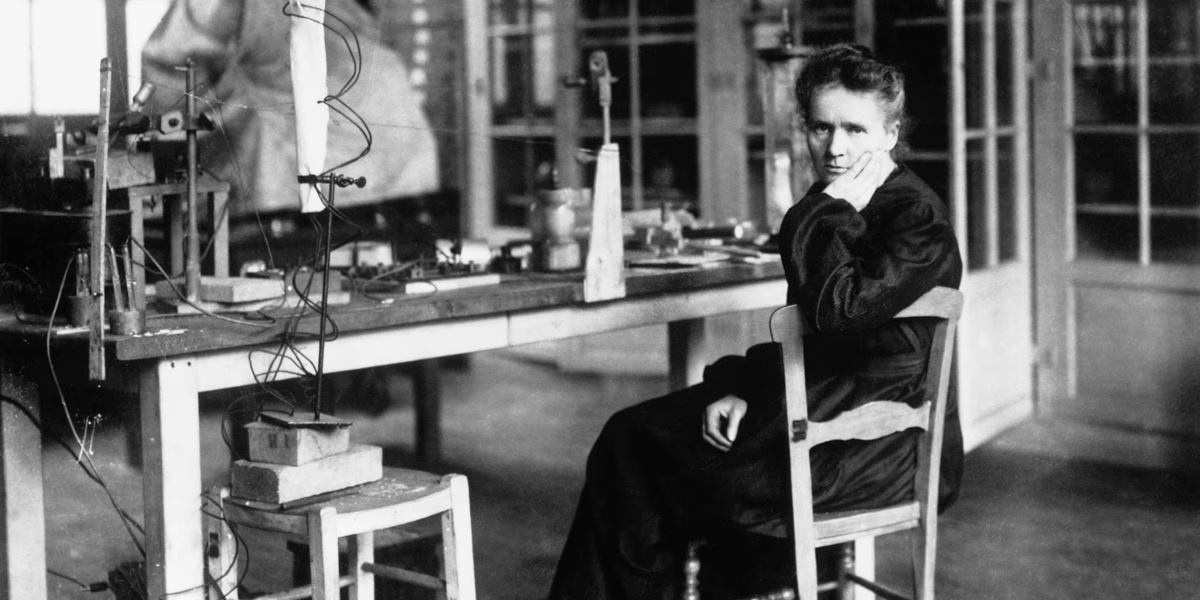
The first woman to ever win a Nobel Prize was a Polish woman named Maria Skłodowska-Curie, better known as Madame Curie. She’s also the only person to win two different Nobel Prizes in two different fields of science, making her one of only four people to ever win more than one!
According to National Institutes of Health (NIH), Maria was born in Warsaw, Poland in 1867. She was the youngest of five children, and her parents were two teachers who instilled patriotism into her from a young age. When she was 10, both her mother and sister died of illness. After she graduated from a girl’s school with a gold medal, she had what is now believed to be depression. A year later, she attended Uniwersytet Latający, which is also known as “the Flying University”.
It was an “underground” (illegal, not physically underground) university in Warsaw meant to teach Polish students information without the government censorship. This was an extremely important part of Skłodowska-Curie’s life because women weren’t allowed to receive an education under Russian rule. Maria and her sister made a pact to assist each other in getting a higher education.
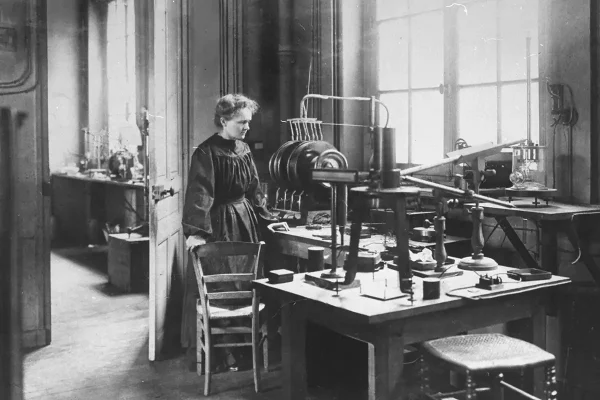
She went to the University of Paris, which had an intense curriculum that even Maria struggled with. Yet, she was prepared and brilliant, so she persevered. However, she suffered from hunger and cold exposure because the money that she made from tutoring was barely enough to live on. In 1893, she got her degree in physics before going on to earn a degree in mathematics the next year. She didn’t have a laboratory to conduct her research, but a professor introduced her to a young scientist named Pierre Curie, who had extra room in his laboratory.
Pierre would propose to Maria in a fairly short time frame after their meeting, but she did not accept it at first. She pushed for him to finish his doctoral studies. In her writings, she would say, “Our work drew us closer and closer, until we were both convinced that neither of us could find a better life companion”. By July 26, 1895, they were married, and Maria hyphenated her name. Now, she was Maria Skłodowska-Curie.
When X-rays were discovered by Wilhelm Roentgen and radioactivity was first observed by Henri Becquerel, Maria became interested. The Curies discovered the first radioactive element. Maria and Pierre agreed on the name in order to bring awareness to Maria’s homeland, which had since been removed from the map and divided up. They settled on calling it polonium. Five months after Poland regained its freedom, radium would be discovered.
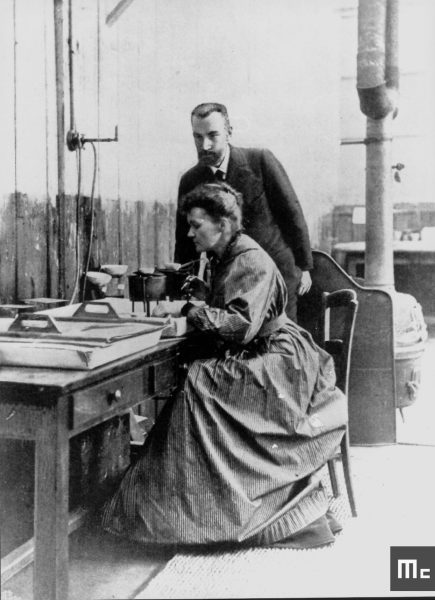
By the 1900s, doctors and scientists announced that radium was being used to successfully fight cancers. In 1903, Maria received her doctorate from the University of Paris. Pierre and Maria were invited to speak on radioactivity by the Royal Institute in London. However, because women weren’t allowed to speak in the Institution, Pierre spoke instead. Later that year, both Maria and Pierre would be invited to the Royal Swedish Academy of Sciences in order to receive Nobel Prizes, along with Becquerel. This wasn’t without controversy; they originally intended not to award the prize to Maria, but a Swedish mathematician and women’s advocate named Magnus Goesta Mittag-Leffler contacted Pierre. Pierre told the committee that he would refuse the award unless Maria was recognized as his equal.
Maria was the first woman to ever win a Nobel Prize, but both her and her husband skipped the award ceremony as they wanted to continue their work. In 1906, Pierre was killed in an accident, leaving Maria alone with their two young daughters. The University of Paris offered her Pierre’s role as professor, making her the first woman professor in the school’s history.
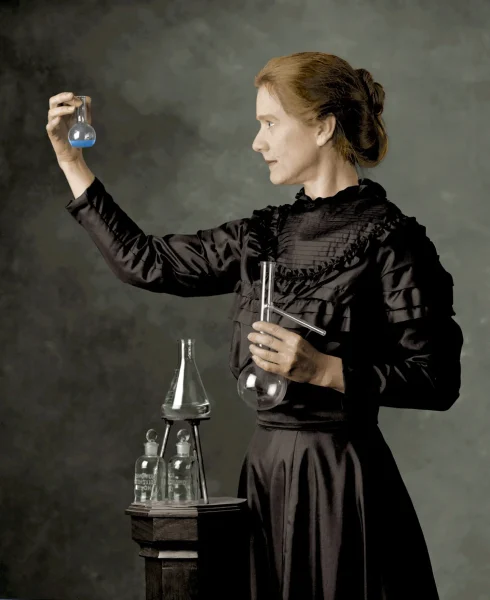
She eventually managed to isolate radium for the first time and developed the standard for radioactive decay, and in 1911, she won her second Nobel Prize: this time in chemistry. In 1913, she returned to her homeland and was greeted as a hero. Her stay didn’t last long, given that “the Great War” soon broke out. Maria responded to the Allies pleas for help in developing radiological stations. She was part of the reason that mobile X-rays were created, which helped aid about 42 million Allied troops.
However, Maria didn’t like the fame that came with it. She would routinely donate the prize money she received, and even repay the already forgiven student loan from the University of Paris. As her research continued, she went to America, where she was met with thousands and thousands of young girls and women. President Harding would give her a gram of radium as a gift from the women, that had started the Marie Curie Radium Fund.
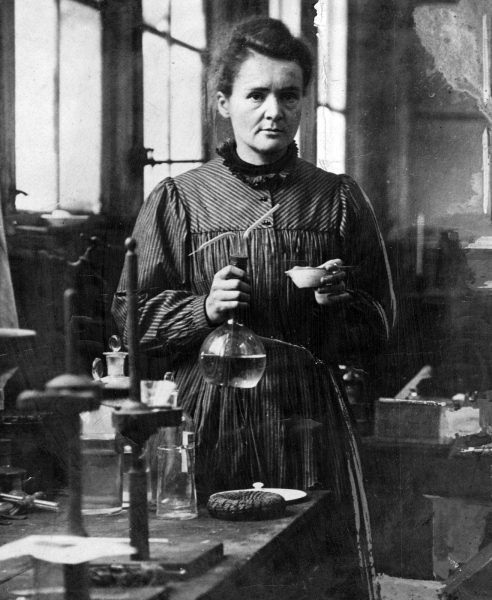
Maria has been memorialized and remembered in a million different ways ranging from getting things named after her and even movies! However, all of that doesn’t nearly account for everything she did, and what she deserves. She never wanted fame, but millions of young girls now know her name, and she continues to inspire. Not just as Madame Curie, but as Madame Maria Skłodowska-Curie, the war hero, the first woman to win a Nobel Prize, the only person ever to win two Nobel Prizes in two different scientific fields, and the scientist.