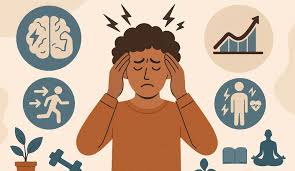
It’s an no secret that high school students are commonly stressed, especially in the modern day. In fact, sources like Healthline say that current stress levels are significantly higher than they were in the 1990s. In fact, there are many different causes for this like schoolwork, jobs, and other extracurriculars. However, while students may feel overwhelmed, it’s important to remember that everyone feels stressed at times. It’s not something to be ashamed of, and there are many different ways to help!
There are many different things that you could do, but one of the biggest and most important things is reaching out for help. If no one around you knows that you’re feeling stressed, then no one around you will be able to help. If students ever feel stressed, they should reach out to their support systems which could include family members, friends, counselors, or even teachers! They can all help you deal with whatever issues you may be having, but if you can’t reach out to them for some reason, there are still other options. If you don’t feel comfortable with trying that either, you can reach out to your primary care physician. If you really, really don’t want to talk to someone in person or someone that you know, you can text “HOME” to the number 741741 and reach a free crisis counselor.
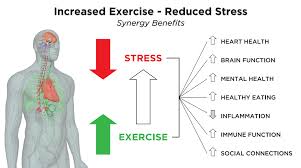
Then, there are some self-help methods that you can do at home if you don’t want to talk to anyone else about it. There are the common recommendations like taking deep breaths, stretching, and meditating. While that may help some people, it might not help you, so there are other options that may be worth a try. According to North Central Health Center, working out, even moderately, can greatly improve your stress levels and provide an outlet. If you find an exercise that you enjoy doing, do it! It is recommended to engage in an exercise for around 2 and 1/2 hours per week, even if you have to slowly build up to it. The reason for this is endorphins. Endorphins are the chemicals in your brain that make you happy and can even make you calm. When you exercise, your body releases these endorphins, which is why it can help reduce stress. Exercising helps regulate and improve your circadian rhythm, which can help you sleep.
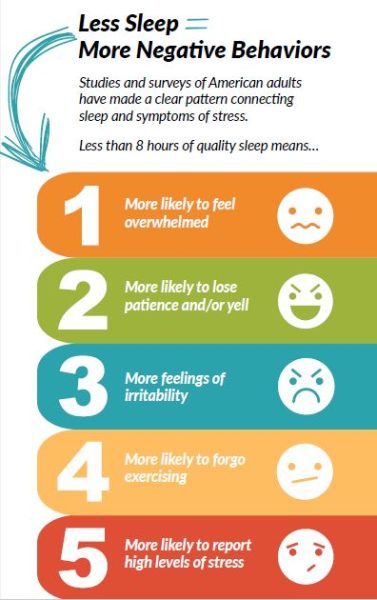
Speaking of sleeping, sleeping is another great way to decrease stress levels! According to the U.S. Centers for Disease Control and Prevention (CDC), sleeping more can make you feel less stressed during the day. It’s recommended that adults get at least 7 hours, and teenagers get 8-10 hours per night. Sleeping the correct amount provides some cognitive clarity, which can make people feel like their problems are more manageable and easier to work through. The science behind sleeping reducing stress is actually really interesting because when you sleep, your body exits the “flight or flight” mode in which you’re in almost constantly whenever you’re awake. This makes your adrenaline and cortisol drop, which lowers your heart rate and blood pressure and releases the stress and anxiety.
Even something as simple as getting out in nature has research and evidence showing that it can help reduce stress. According to Harvard Health Publishing, spending a mere 20-30 minutes outside can greatly reduce cortisol levels. So, while reducing your stress may sound difficult, it can easily be obtained from little changes in your schedule over time. Sleeping more, working out, and being in nature more can all be increased slowly over time and provide long-lasting benefits.
Stress is something that nearly every high school student experiences at some point, but it’s important to remember that there are plenty of healthy ways to deal with it. Different methods work for different people, so don’t be panicked or upset if one method doesn’t work right away. By making self-care a priority, students are already taking the steps to improve their well-being and reduce stress.