In the 2025-2026 school year of Heritage High School, a new rule was put upon the students, a phone ban policy. This rule followed after the former governor of Virginia banned cell phones use throughout all schools in Virginia . The phone policy consists of absolutely 0 phones within class time, and in the first 30 minutes of study hall, which is almost 90% of the school day. Something as drastic as this is bound to spark opinions in the people throughout Heritage . Upon interviewing students and teachers at Heritage about the new phone policy, there were mixed feelings about the new policy.
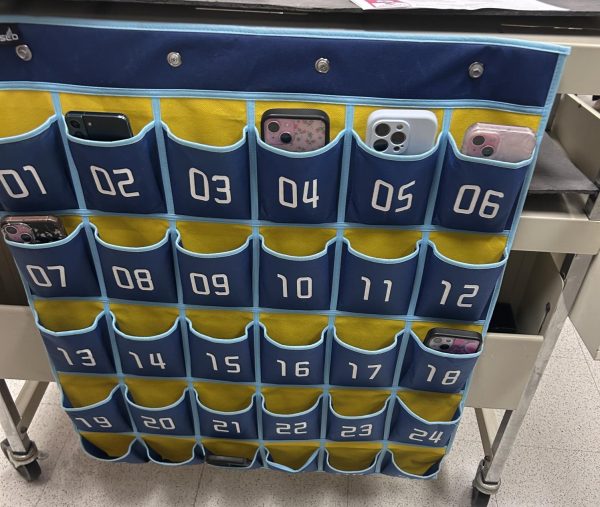
This cell phone ban isn’t exclusive to Heritage High School, but also many other schools. Nearly 14 states have issued statewide phone bans ranging from Florida to Utah. But why so suddenly? Well, many studies have been coming out over the years which say cell phones have a negative impact on students academically and socially. Exemplifying this, the Boston Digital Wellness Lab, states, “Nearly three-quarters (72%) of high school teachers, a third of middle school teachers, and even 6% of elementary school teachers say that “students being distracted by their cellphones in the classroom is a major problem.” So with these large margins of students who are often distracted by their phones, it makes sense why the cell phone bans are coming to schools. Other studies point to the fact that students are more interested in their work with the cell phone bans in place. Since cell phone bans have been implemented, “Students reported improved grades, focus and social interaction. They also credited the ban with fewer fights and incidents of cheating,” according to a teacher from an Auburn University study. With all of these research findings, it seems reasonable schools started these bans. Although, students feel differently.
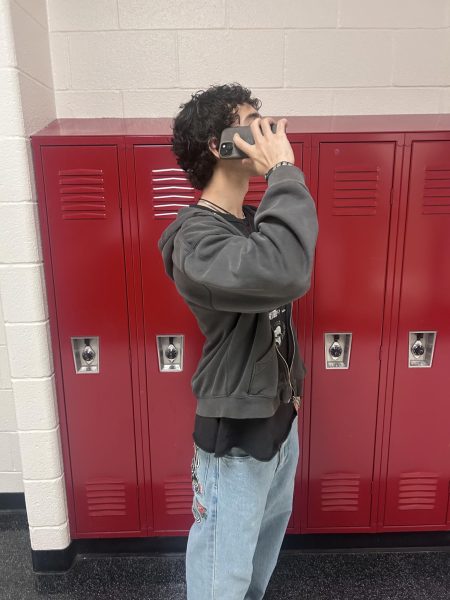
Furthermore, students at Heritage have been affected by this policy. For example, Kathryn Welker, a student at Heritage, said ” I enjoy school a lot less now ” since the cell phone policy was implemented. Although, other students have different opinions: Jakob Marroquin disagreed with Welker and feels that this school year is not any different than the last school year despite the policy change. Perhaps, this could be due to the fact that excessive cell phone use can now be classified as an addiction and certain students are more addicted than others. Other students offered advice to make the policy better. For instance, Neha Nookala felt that “we should have our phones during Pride time, or it should be the teacher’s discretion.” Other students including Tommy Utendorf and Aiden Hunt agreed with Nookala. Another big point being made clear by the students is that they don’t like that the first 30 minutes of study hall doesn’t allow cell phones, and they just want “some freedom in study hall.” Another point made by Welker was that “seniors should have phone privileges since they are more mature.” This poses an interesting argument. Since many seniors are 18 or older, technically adults now, they feel at the very least they should get their phones compared to the younger students who are far less disciplined.
However, the teachers at Heritage High School are more unified in their opinions for the most part and have been seeing positive results. According to Jessika Proctor, a teacher at Heritage, her students are getting better socially and academically since the cell phony policy was enacted. This is particularly interesting because phones are used to communicate, but teachers have been seeing increased social activity in class which could mean that phones are worsening in-person social skills. Proctor also spoke on the strictness of the policy saying that it is appropriate for the current times “and people didn’t listen to instructions last year ” compared to less strict rules last school year. Proctor also mentioned how phones are an addiction, a sediment with which Heritage teacher, Elizabeth Hale, agrees. Something else that was surprising was Proctor believes that headphones should be allowed in class or perhaps let students charge their phones during class time. Although this opinion is not shared by all, especially by Hale, who has taken a more extreme stance on this situation. Hale believes “phones aren’t good for developing brains.“ Therefore, she feels that students shouldn’t even bring their phones to school, or at the very least, class time would be more useful it if students lock them up at the start of the day. She said, “Calling students names for their phones wastes so much class time.“ Particularly, class time is wasted in classes with underclassmen who are less inclined to put their phone up.
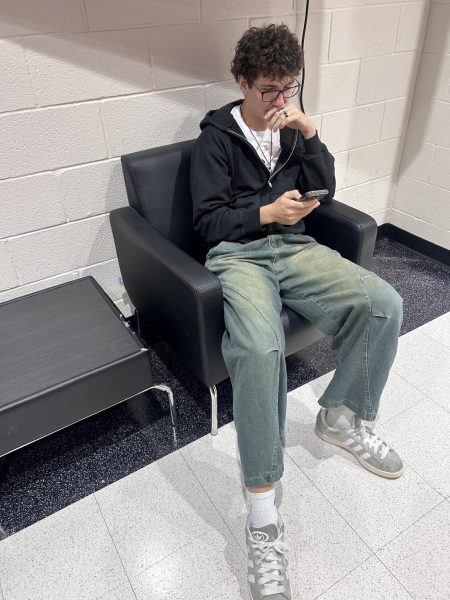
There seems to be very mixed opinions from all demographics about the phone policy. Many students want a far less strict policy while some teachers feel it isn’t strict enough. The compromise to this would be for students to have their phones at teachers discretion or choice. This was how it was for the previous years in Heritage, but students proved that this privilege was too much to handle with many not listening to teachers and being on their phone rather than doing the work. As a student at Heritage, I would like the use of my phone throughout the day, but I would be wrong if I said I’m getting less work done and worse grades with this new policy. So should students be allowed their phones in class or should things be kept as is?
After talking with people within the Heritage community, it seems as if this policy is more of a positive influence on students than something negative. With teachers seeing improved social interaction and grades improving, it wouldn’t make sense to remove this policy now, and even if it not a state law, Heritage will likely still keep this policy. Cell phones really are an addiction, and the time throughout the day when students are not using their cell phone tends to prove the most productive. Despite the mixed opinions from the community, this new policy is for the good of the Heritage community and students in particular.